
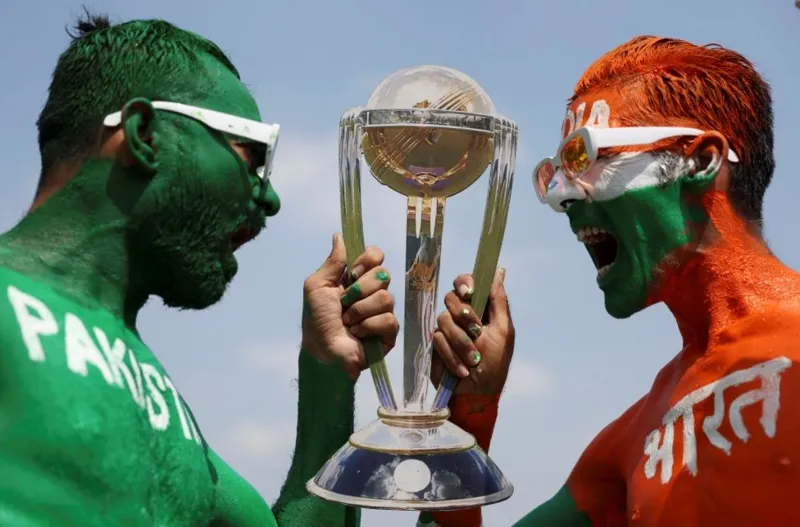
India vs Pakistan rivalry once defined world cricket. As Pakistan boycotts the 2026 T20 World Cup clash, has the contest lost its edge?
There has always been a complicated relationship between sports and politics. At times, politics has inflamed rivalries; at others, sport has softened borders that diplomacy could not. Few contests capture this contradiction better than cricket’s most storied rivalry — India versus Pakistan.
For decades, an India–Pakistan match was more than just a game. It was emotion, identity, memory, and mythology rolled into 40 overs or five days. Stadiums crackled, television ratings exploded, and careers were made or immortalised in a single afternoon.
But as the 2026 T20 World Cup approaches, with Pakistan announcing its decision to boycott the group-stage clash against India, an uncomfortable question has resurfaced:
👉 Does this rivalry still matter on the field — or only on balance sheets and nostalgia reels?
🌍 When Cricket Rose Above Politics
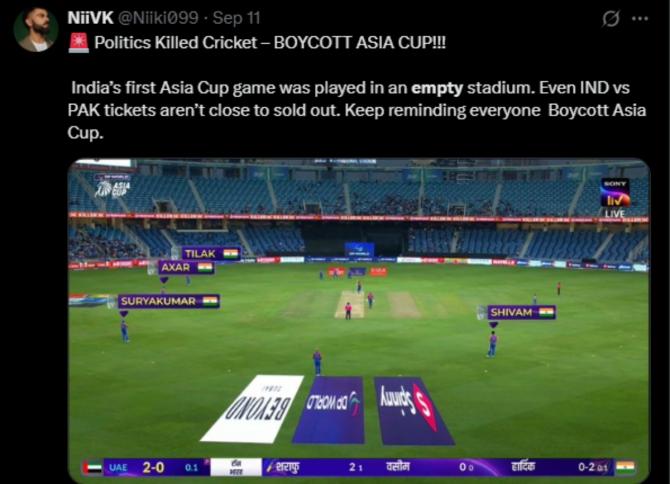
The India–Pakistan rivalry was not always defined by hostility alone. In fact, some of its most iconic chapters were written when politics threatened to derail everything.
When India lifted the 1983 World Cup, it altered the power structure of global cricket. Soon after, BCCI president NKP Salve and Pakistan’s Air Marshal Nur Khan joined hands to bring the World Cup to the subcontinent in 1987. This was a period when the two nations were closer to conflict than cooperation — yet cricket prevailed.
In a remarkable gesture, Pakistan President General Zia-ul-Haq travelled to Jaipur in 1987 to watch a Test match between the two sides. His visit and meeting with Indian Prime Minister Rajiv Gandhi helped ease diplomatic tensions. It was cricket diplomacy at its finest.
The 1996 World Cup, co-hosted by India, Pakistan and Sri Lanka, delivered moments that still live in cricketing folklore — Aamer Sohail’s send-off, Venkatesh Prasad’s fiery response, and a charged Chinnaswamy Stadium that symbolised everything intense and chaotic about the rivalry.
🏟️ The Golden Era of Competition
The 1990s and early 2000s were the rivalry’s peak. It wasn’t just hype — it was competitive, unpredictable and evenly matched.
- Wasim Akram vs Sachin Tendulkar
- Shoaib Akhtar vs Rahul Dravid
- Shahid Afridi vs Sourav Ganguly
Matches swung wildly. Series were closely fought. Victories on either side felt earned, not inevitable.
The 2004 India tour of Pakistan remains one of the most heartwarming chapters in cricket history. Sourav Ganguly’s team didn’t just dominate on the field — they won hearts off it. Indian fans were welcomed into Pakistani homes, and cricket briefly did what politics could not.
That was rivalry with respect. Rivalry with substance.
💔 The Turning Point: 2008 and After
Everything changed after the 2008 Mumbai terror attacks.
Since January 2013, when Pakistan last toured India, the two teams have not played a single bilateral series. Meetings have been restricted to ICC and ACC tournaments, carefully scheduled on neutral or hybrid venues.
India never returned to Pakistan. Pakistan, however, continued to travel to India for ICC events, including the 2023 ODI World Cup. When it was India’s turn to travel for the 2025 Champions Trophy, the Indian government refused permission, forcing the ICC to adopt a hybrid model.
By then, the rivalry was already surviving more on memory than reality.
🚫 Pakistan’s 2026 T20 World Cup Boycott
In early 2026, the situation escalated further.
The Government of Pakistan, through its official X (formerly Twitter) account, announced that while the Pakistan team had permission to travel to Sri Lanka for the 2026 T20 World Cup, it would not take the field against India on 15 February 2026.
No official reason was stated.
Pakistan are placed in Group A alongside India, Namibia, Netherlands and USA, with Sri Lanka serving as the venue for all their matches. By boycotting the India game, Pakistan will:
- Forfeit two crucial points
- Take a hit on net run rate
- Potentially damage their qualification chances
India, meanwhile, remains unaffected in terms of NRR.
The PCB is yet to formally inform the ICC, but the intent is clear — a targeted boycott, not a tournament withdrawal.
💰 The Fixture That Funds World Cups
From a business perspective, India vs Pakistan remains unmatched.
- Each match between 2023–2027 is valued at USD 250 million under the ICC–JioStar deal
- Advertising slots cost upwards of ₹40 lakh
- Tickets sell out in seconds
- Broadcasters build weeks of hype
It’s why the ICC has ensured the two teams share the same group in every major event since 2012.
But revenue does not equal rivalry.
📉 Numbers Don’t Lie: A One-Sided Contest
Strip away the nostalgia, and the recent cricketing record is brutal.
Since their last bilateral series:
- India and Pakistan have met 23 times in multi-nation tournaments
- India have won 19 of those matches
In World Cups alone:
- Combined ODI + T20 WC record: India lead 14–1
- T20 World Cups: 7–1
India’s dominance isn’t subtle — it’s overwhelming.
Even India’s T20I captain Suryakumar Yadav said it plainly:
“If two teams play 15–20 matches and the head-to-head is 7–7 or 8–7, that’s a rivalry. But 13–0, 10–1… this is not a rivalry anymore.”
That comment came just days before India defeated Pakistan yet again in an Asia Cup final.
👩 Women’s Cricket Tells the Same Story
The imbalance isn’t limited to men’s cricket.
- Women’s T20Is: India lead 13–3
- Women’s ODIs: India 12–0 Pakistan
Across formats and genders, the competitive gap has widened.
🧠 “Just Another Game” — And That’s the Truth
Virat Kohli and Rohit Sharma have repeatedly described India–Pakistan matches as “just another game.” That mindset defines the current Indian setup.
There is no fear. No obsession. No desperation.
So if Pakistan chooses not to play in Colombo — India will not blink.
The World Cup will go on.
The BCCI will recover financially.
The ICC will adapt.
💔 The Real Losers: The Fans
Ironically, the biggest loss isn’t administrative or financial.
It’s emotional.
Generations of fans grew up believing India vs Pakistan was cricket’s ultimate theatre. Today, that belief is sustained by highlight reels, marketing campaigns like “Mauka Mauka”, and collective memory — not competitive reality.
The aura remains.
The contest does not.
🏁 Final Thoughts: Rivalry as a Relic
Rivalries thrive on uncertainty, balance and shared excellence. Without those elements, they become rituals — profitable, dramatic, but hollow.
India vs Pakistan will always attract eyeballs.
But unless Pakistan bridge the on-field gap, it will no longer define cricket’s soul.
The 2026 T20 World Cup boycott doesn’t kill the rivalry.
It merely confirms what the numbers have been saying for years:
👉 The myth lives on. The rivalry does not.