

Why Gen Z is turning to astrology for self-discovery, emotional clarity, and identity in the fast-paced digital age. A deep cultural analysis.
The Rise of Astrology Among Gen Z: Self-Discovery in the Digital Age
In a world that never slows down, knowing oneself has quietly become a luxury. Life today is defined by speed — endless notifications, tight deadlines, algorithm-driven content, and constant pressure to stay relevant. Everyone is hustling, scrolling, building something, or becoming something. Somewhere between dopamine hits and digital overload, self-reflection often slips through the cracks.
Yet, Gen Z is refusing to live on autopilot.
Unlike earlier generations that were conditioned to prioritise productivity over pause, Gen Z is asking deeper, more personal questions: Who am I really? Why do I feel this way? What suits me, not just socially but emotionally? Instead of glorifying burnout, this generation is leaning into awareness, boundaries, and self-alignment.
And in this search for meaning and identity, an age-old system has found new relevance — astrology.
Astrology’s Resurgence in a Hyper-Digital World
Astrology’s growing popularity among Gen Z may seem paradoxical in an era dominated by data, logic, and science. However, this resurgence is not about blind faith or superstition. Rather, it reflects a cultural shift towards introspection, emotional literacy, and identity exploration.
For Gen Z, astrology functions less as a belief system and more as a framework for self-understanding. Zodiac signs, birth charts, and planetary placements provide a language to describe inner patterns — moods, reactions, strengths, and vulnerabilities — that are otherwise difficult to articulate.
Instead of asking astrology to predict the future, Gen Z uses it to decode the present.
A Generation That Chooses Self-Awareness Over Burnout
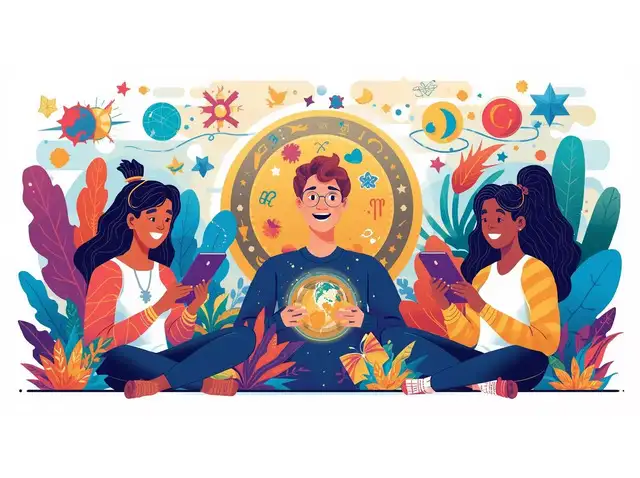
Gen Z has grown up watching the cost of unchecked hustle culture. They have seen millennials burn out under corporate pressure, emotional exhaustion, and unrealistic success narratives. As a result, this generation places a higher value on mental health, work-life balance, and authenticity.
Astrology fits seamlessly into this worldview. It offers insight without judgment, guidance without rigid rules. Many Gen Z individuals turn to astrology to understand:
- Emotional triggers
- Relationship dynamics
- Burnout tendencies
- Communication styles
- Personal strengths and limitations
Rather than viewing personality traits as flaws, astrology reframes them as inherent tendencies — something to manage, not suppress.
Astrology as a Tool for Emotional Literacy
One of the most powerful reasons astrology resonates with Gen Z is its role in emotional awareness. Mental health conversations are no longer taboo for this generation; they are central.
Astrology gives names to feelings that many struggle to identify:
- Overthinking becomes “air-sign restlessness”
- Emotional intensity becomes “water-sign depth”
- Detachment becomes “earth-sign grounding”
- Burnout becomes “Capricorn exhaustion”
This symbolic language makes emotions easier to express, normalise, and share. In a world that often demands emotional resilience without providing tools, astrology offers a softer entry point into self-reflection — one that feels accessible and non-threatening.
A Shared Digital Language of Belonging
Astrology today is not a solitary practice. It thrives in group chats, comment sections, memes, and social media threads.
Phrases like “Mercury retrograde chaos,” “Scorpio energy,” or “Pisces emotional overload” act as cultural shorthand. They allow people to communicate complex emotions quickly, without over-explaining themselves.
In an online-first world, astrology functions as social glue:
- It builds instant connection
- Creates inside jokes
- Encourages emotional openness
- Fosters a sense of belonging
For Gen Z, zodiac signs are not about destiny — they are about relatability.
The Role of Social Media in Astrology’s Popularity
Digital platforms have played a crucial role in reshaping astrology for a younger audience. What was once dense, text-heavy, and exclusive has been transformed into engaging, bite-sized content.
- Instagram carousels explain zodiac traits
- TikTok videos decode birth charts in under a minute
- Podcasts discuss compatibility and emotional patterns
- Memes turn vulnerability into humour
Algorithms amplify content that resonates emotionally, and astrology content does exactly that. It validates feelings, encourages self-awareness, and provides momentary clarity in an otherwise chaotic digital landscape.
Identity in an Uncertain World
Gen Z has grown up amid economic instability, climate anxiety, global pandemics, and rapid technological change. Traditional markers of identity — stable careers, long-term security, predictable life paths — feel increasingly fragile.
Astrology offers something grounding: a sense of identity that does not depend on external validation. It allows individuals to understand themselves beyond achievements, appearances, or social status.
In a constantly shifting world, astrology offers a narrative — one that says you are complex, evolving, and allowed to change.
Astrology Is Not Faith — It Is a Framework
What truly sets Gen Z apart is how they engage with astrology. This generation does not surrender agency to the stars. Instead, they approach astrology with curiosity, humour, and discernment.
Many Gen Z individuals openly acknowledge:
- Astrology is not scientific
- Not every trait applies universally
- Interpretations are flexible, not absolute
Yet, they still find value in it. Why? Because meaning matters. Astrology offers meaning in a way that feels personal, adaptable, and emotionally resonant — without demanding unquestioned belief.
The Intersection of Wellness and Astrology
Astrology has increasingly merged with the wellness industry. From mindfulness apps to therapy conversations, zodiac-based insights are often used to initiate deeper self-care practices.
People use astrology to:
- Choose healthier routines
- Understand stress patterns
- Improve communication in relationships
- Set emotional boundaries
In this context, astrology becomes less mystical and more reflective — a tool for intentional living.
A Cultural Shift, Not a Passing Trend
Critics often dismiss astrology’s popularity as a fleeting trend. However, its sustained presence among Gen Z suggests something deeper: a cultural shift towards introspection in an age of excess information.
Astrology’s appeal lies not in certainty, but in self-curiosity. It allows Gen Z to explore identity without rigid labels, to find language for emotions, and to feel seen in an overwhelming world.
Final Thoughts
The rise of astrology among Gen Z is not a rejection of science or logic. It is a response to speed, pressure, and emotional overload. In turning to astrology, Gen Z is not escaping reality — they are attempting to understand themselves within it.
Astrology, for this generation, is not about predicting destiny. It is about self-discovery, emotional clarity, and connection. In the digital age, where identity is constantly curated and questioned, the stars offer something rare — a moment to pause and look inward.
And perhaps that is why astrology shines brighter than ever.