
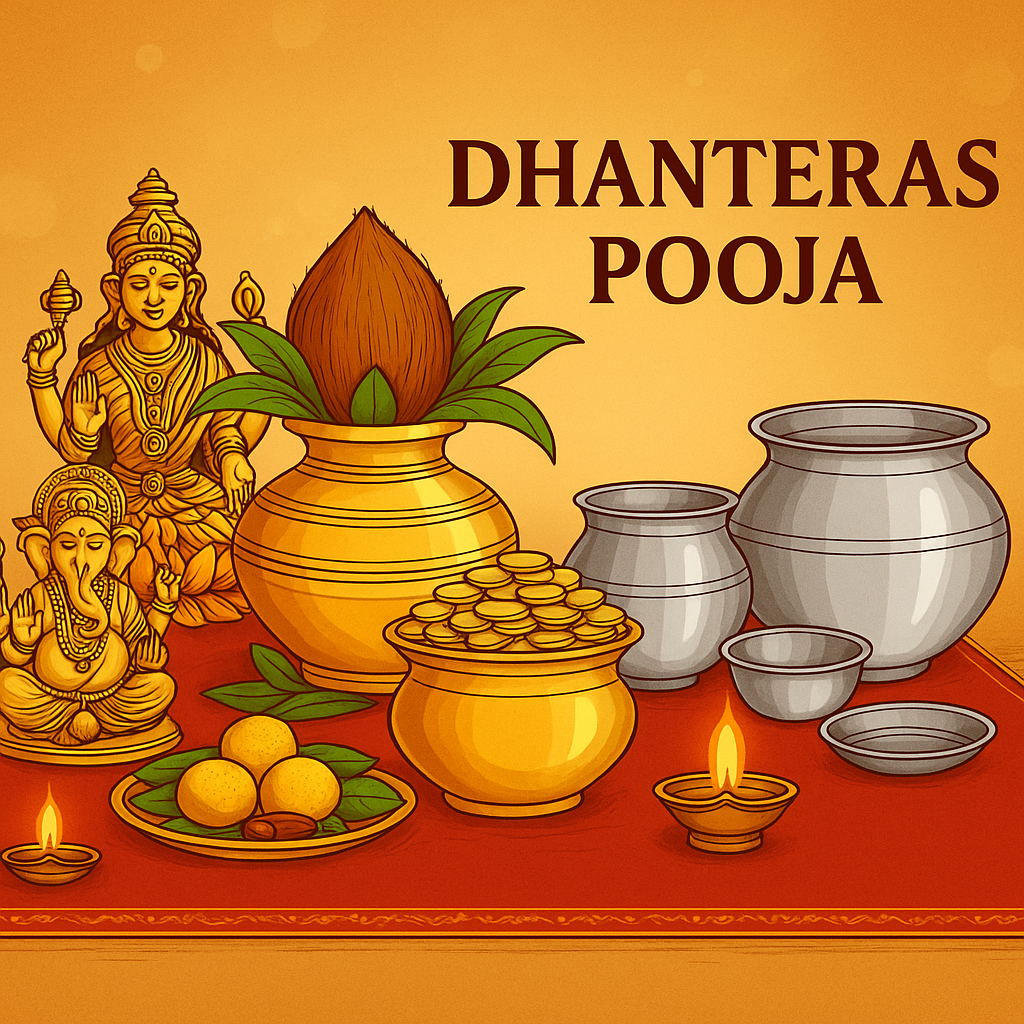
Dhanteras Pooja marks the auspicious beginning of Diwali celebrations, when devotees invite prosperity and good health into their homes. It is not just about new purchases and shining lamps — it’s a deep-rooted ritual that blends myth, devotion, cleansing and hope for the year ahead.
What is Dhanteras Pooja and Why Does It Matter?
The term “Dhanteras” comes from “Dhan” (wealth) + “Teras” (thirteenth day) of the lunar fortnight.
On this day, the Dhanteras Pooja is performed to honour multiple deities associated with wealth, health and longevity — chiefly Goddess Lakshmi (wealth), Lord Kubera (treasurer of the gods) and Lord Dhanvantari (the divine healer, god of Ayurveda).
Why it matters:
- It marks the official onset of the five-day Diwali festival.
- It symbolises the balance of wealth and health — not just material riches but also the wellbeing needed to enjoy them.
- It is an opportunity to cleanse, renew and invite auspiciousness into home and life.
Thus, the Dhanteras Pooja becomes a ritual of hope, of setting the tone for what follows in Diwali, and aligning one’s life with prosperity in a holistic sense.
Mythology and Significance Behind the Rituals
Myth 1: Emergence of Goddess Lakshmi & Lord Dhanvantari
During the cosmic event of Samudra Manthan (churning of the ocean of milk), it is said that Goddess Lakshmi emerged from the sea, symbolising wealth, fortune and prosperity.
At the same time, Lord Dhanvantari — the physician of gods — emerged with the pot of amrit (nectar of immortality), marking health, healing and longevity.
Myth 2: King Hima and the triumph over death
A popular legend says that King Hima’s son was destined to die by snakebite on his fourth wedding day. His clever bride laid out her gold and silver ornaments and kept lamps burning all night. When Yama, god of death, came disguised, he was blinded by the brilliance of the ornaments and lamps, and thus the prince was saved. This inspired the tradition of lighting lamps and buying precious metals on Dhanteras.
Symbolic Significance
- Wealth (Dhan): Buying gold, silver or new utensils is understood not just as shopping but as inviting Lakshmi’s presence
- Health & longevity: Worshipping Dhanvantari recognises that without health, wealth is of little use.
- Renewal & purification: Cleaning the home, lighting lamps, making special offerings — all point to starting afresh, dispelling darkness and ignorance, welcoming light, knowledge and fortune.
Preparing for the Dhanteras Pooja: What to Do Before the Ritual
Clean and decorate your home
- Sweep, clean and declutter. Cleaning the home is one of the first rituals of Dhanteras.
- Draw a rangoli at the entrance and place diyas (oil lamps) or candles around doors and windows. The light is symbolic of dispelling darkness.
- Decorate the puja area with fresh flowers, incense, and arrange the deity idols or pictures.
- Identify a clean, quiet space for the pooja mat, idols and offerings.
Arrange the buying of new items (if desired)
Since Dhanteras is considered auspicious for buying precious items, you may plan to purchase:
- Gold or silver jewellery or coins.
- New utensils or kitchenware made of metal (pure or good quality).
- Household appliances, or items that mark a fresh investment (Note: the key is intention, not extravagance).
- Keep the item ready for later in the day to be placed near the puja as an offering or symbol of welcomed wealth.
Arrange the puja materials
Some common items needed:
- Idols or images of Goddess Lakshmi, Lord Kubera, Lord Dhanvantari (or substitute with a lamp symbol)
- Diya(s) and oil/ghee for lighting
- Incense sticks, camphor
- Fresh flowers (marigold, lotus, jasmine as available)
- Fruits, sweets (ladoos, sweet rice etc.) and betel leaves
- Metal coins, gold/silver items if new purchases are to be blessed
- Clean white cloth for altar, small table or low platform
- A small bell, tray for offerings
- Water for sprinkling (optional: Ganga water)
- New utensils or items (to be kept near altar or placed as offering later)
Choose the auspicious time (muhurta)
For best results in ritual, it’s traditionally recommended to perform the Dhanteras Pooja during the pradosh kala (evening time) or the muhurta prescribed for your location, based on the lunar calendar.
Check your local panchang for the exact time in your city.
Step-by-Step: How to Perform the Dhanteras Pooja
Here is a simplified and easy-to-follow ritual that you can adapt to your household. The main keyword Dhanteras Pooja is incorporated at the start of this section for clarity and SEO.
Step 1: Invocation & Sankalpa
- Sit facing east or north-east (if possible).
- Light the diya, incense, and ring the bell to mark the start.
- Take a brief moment of silence, close your eyes and meditate on the purpose of the pooja — inviting wealth, wellness, peace and prosperity.
- Chant a Sankalpa (resolve): for example, “I devote this Dhanteras Pooja to the welfare, wealth and wellbeing of my family and self,” etc.
Step 2: Cleaning and Purification
- Sprinkle some water around the puja area to symbolise cleaning and purification.
- Wave the incense around the idols or photos of deities.
- Offer some flowers and clean cloth to cover the altar.
Step 3: Worship of Deities
Worship of Goddess Lakshmi
- Place the idol or image of Lakshmi on the altar, decorate with flowers.
- Offer fruits, sweets, betel leaves, a coin or new metal item (if applicable).
- Light the diya and chant or recite a Lakshmi mantra or simple prayer: e.g. “Om Shreem Mahalakshmiyei Namah.”
Worship of Lord Kubera & Lord Dhanvantari
- If possible, also place an image of Kubera (wealth) and Dhanvantari (health) on the altar.
- Offer a small coin or seed (symbol of growth) to Kubera, and a medicinal herb or small item to Dhanvantari as offering. This is symbolic but meaningful.
- Recite: “Om Dhanvantari Devaya Namah” for health and well-being.
Step 4: Lighting Lamps and Diyas
- Light multiple diyas in and around the puja area, entrance, or windows. The light symbolises welcoming the goddess of wealth into your home.
- Some traditions keep lamps burning for the whole night or till a specific hour, but ensure safety and comfort.
Step 5: Offerings (Naivedya)
- Present the fruits, sweets, betel leaves to the deities. Some popular offerings are ladoos, rice pudding (kheer), and seasonal fruits.
- Use fresh items, offer with gratitude, and later share the prasad (blessed food) with family.
Step 6: Aarti and Bhajan
- Sing or play a short aarti dedicated to Goddess Lakshmi or Dhanvantari.
- Clap or ring the bell during aarti, pass the flame (if safe) among family members to symbolise shared light and blessing.
Step 7: Offering/Placing New Items
- After the pooja, if you have bought a new metal item (gold, silver, utensils etc.), place it near the altar (or in the puja area) for a while to receive blessings.
- Some people keep the new item untouched until the next morning, as a sign of reverence.
Step 8: Closing Prayers & Share Blessings
- Conclude by thanking the deities for their blessings.
- Distribute prasad among family members.
- Make a resolve to use wealth and things bought with responsibility, kindness and good intention — wealth is to be used wisely and for good.
What to Buy (and Why) on Dhanteras
One of the distinctive customs of Dhanteras is buying something new that symbolises prosperity. Below is guidance to help you make wise choices.
Why we buy
- Buying gold, silver or utensils is symbolic of inviting Goddess Lakshmi’s blessings
- A purchase on this day is believed to multiply in value and perpetuate good fortune.
- It also marks starting something new — a fresh investment, renewal in home or life.
What you may consider
- Gold or silver jewellery, coins.
- Metal utensils, new cookware, kitchenware — especially if you’ve been postponing replacement.
- Home appliances or electronics that help enhance life (if well-planned).
- Books, educational tools, anything that symbolises growth or prosperity.
- Note: The value lies in intention, not how expensive the item is.
Things to keep in mind
- Spend responsibly — do not overstretch finances just for the sake of ritual.
- Choose quality items that will last, align with the idea of virtue and purpose, rather than mere show.
- Some regions consider silver more auspicious than expensive gold; follow your family or regional custom.
- After buying, ensure the item is placed respectfully (or kept clean) until the next morning.
Common Mistakes & What to Avoid During the Dhanteras Pooja
To get full benefit from Dhanteras Pooja, one should observe not only what to do but also what not to do.
Avoid these pitfalls
- Do not ignore the muhurta/time-slot – it adds auspiciousness, although sincerity is more important.
- Avoid making loud arguments or negativity at home on this day — the atmosphere should lean toward peace and renewal.
- Don’t bring home empty boxes or unwanted items as “new things” just for show; they reflect incompleteness rather than abundance.
- Avoid purchasing items that are defective, poor in quality or likely to bring constant repair/expense.
- Do not place lamps or diyas in unsafe spots or areas where fire hazard is high.
- If you bought an item, don’t neglect it — keep it clean, use it with thought and respect.
- Do not skip sharing or distributing prasad or blessings with family/community — the spirit is collective.
Bringing Meaning to the Day: Beyond Rituals
While the rituals of the Dhanteras Pooja are important, adding deeper meaning enhances the experience.
- Reflection: Ask yourself what “wealth” means for you this year. Is it purely monetary, or is it health, relationships, peace of mind?
- Gratitude: Take a moment to thank for the things you already have. The act of acknowledging existing blessings opens your heart for more.
- Purposeful purchase: When buying something, align it with usefulness, sustainability, or support of someone (rather than just consumerism).
- Service: Consider donating to someone in need, or offering a helping hand — this heightens the spirit of abundance.
- Family involvement: Make the ritual inclusive. Have children light a lamp, explain the significance, share sweets. Traditions endure when passed on.
- Mindful lighting: Let the lighting of lamps be symbolic — say an intention each time you light one: “May this light bring knowledge/to my life”, etc.
- Use the new item well: The next morning or whenever you begin using the new utensil or item, do it with thought: “I will use this wisely, responsibly, for good.”
After the Pooja: Celebrations, Eating, and Sharing
Once the pooja is complete:
- Share the prasad (sweets/fruits) with all family members and visitors.
- Enjoy a special meal together; many families prefer to eat something new or something sweet as part of the festivities.
- Dispose of any waste from the pooja respectfully (flowers, incense).
- If the new purchase is an item to be used (e.g. utensil), start using it soon after or the next morning with prayer or positive thought.
- Maintain the cleanliness and brightness of your home in the days ahead — continuing the spirit of renewal.
- If you like, dress nicely and exchange greetings or small gifts with family/friends to continue the festive mood.
FAQs & Quick Tips for Dhanteras Pooja
Q. Is Dhanteras Pooja only for Hindus or can anyone do it?
A. While the origin is Hindu, the values of inviting well-being, renewal, and prosperity are universal. Anyone may adopt the essence of the ritual in their own way.
Q. Can I do the pooja at a time other than the “muhurta”?
A. Yes — sincerity matters more than perfection. Doing with devotion at a convenient time is better than skipping entirely. Try to follow local muhurta if possible.
Q. Do I have to buy gold or silver?
A. No. The significance lies in intention. Even buying a simple utensil, a book, or something new and meaningful can symbolise the ritual.
Q. My home is small and participation limited. Can I simplify the pooja?
A. Absolutely — a clean corner, one diya, simple fruit/sweet offering are enough. The essence is devotion, not complexity.
Q. After the pooja, can I immediately use the new item I bought?
A. It depends on custom — some wait until the next morning; others after the pooja. Ensure you treat the item with respect and purpose.
Quick Tip Checklist:
- Clean house & puja area
- Light lamps & incense
- Arrange deities, offerings
- Decide any new purchase
- Perform pooja with devotion
- Share prasad & blessings
- Use new item mindfully
Conclusion: Embracing the Spirit of Dhanteras
In conclusion, Dhanteras Pooja is far richer than just a ritual or a shopping day. It marks a moment of intention — to welcome not only material prosperity, but health, purity, light, renewal and mindfulness. By combining mythological depth with everyday action (buying responsibly, cleaning your space, lighting a lamp), you align your outer world (home, possessions, wealth) with your inner world (mind, intent, purpose).