
Generative AI: A Complete Guide to AI That Creates Content
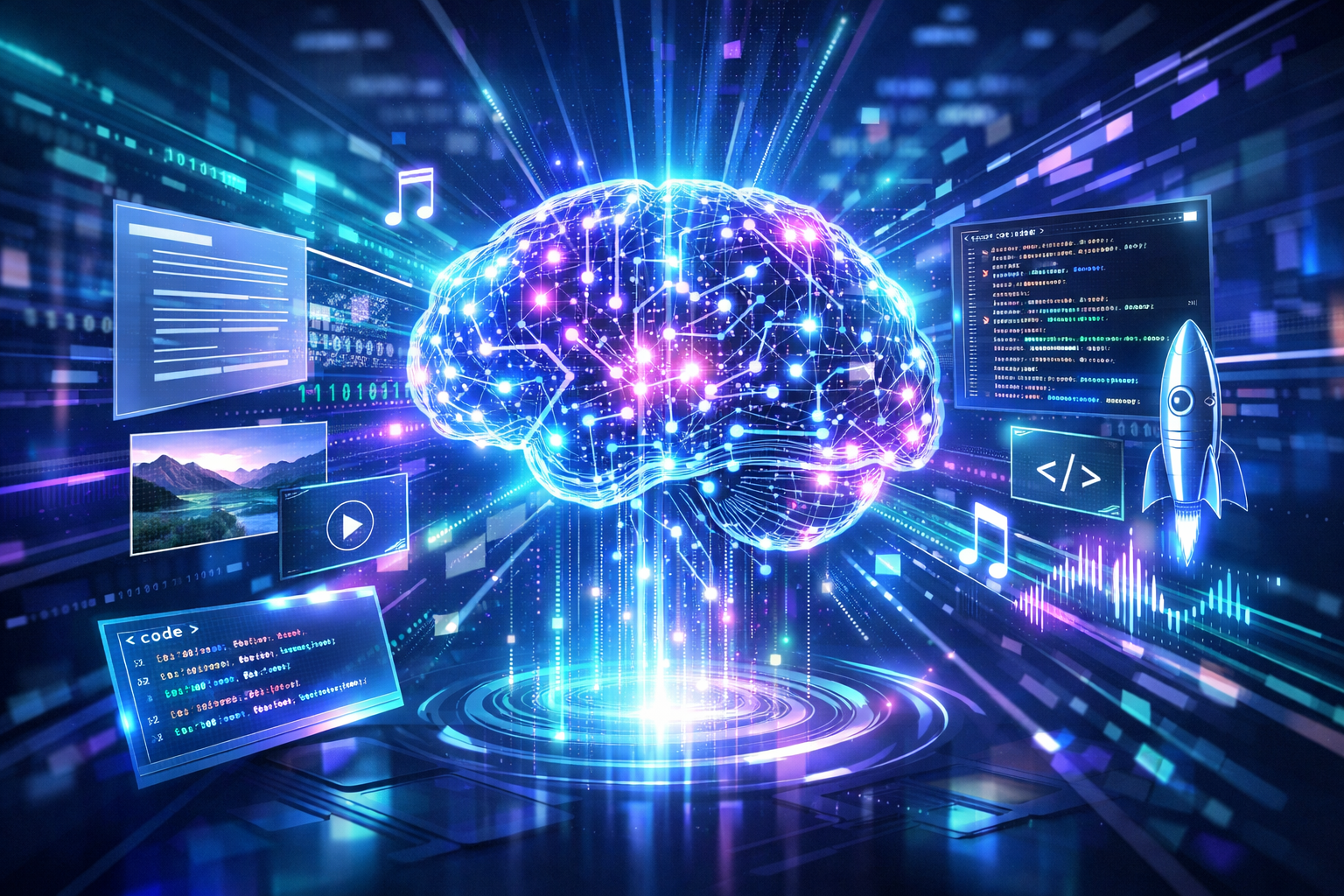
Generative AI is transforming how we create content, design products, write code, and even make decisions. From generating human-like text and images to composing music and building software, Generative AI is redefining creativity in the digital age. Instead of simply analyzing existing data, this advanced form of artificial intelligence can create entirely new content that feels original, intelligent, and highly relevant.
What Is Generative AI?
Generative AI refers to a type of artificial intelligence designed to generate new content such as text, images, videos, audio, code, and synthetic data. Unlike traditional AI systems that focus on classification or prediction, Generative AI creates something new by learning patterns from large datasets.
For example:
- Writing articles or marketing copy
- Generating realistic images or artwork
- Creating music or voiceovers
- Producing software code
- Designing products or concepts
At its core, Generative AI mimics human creativity using advanced machine learning models.
How Generative AI Works
Generative AI works by training on massive amounts of data and learning patterns, structures, and relationships within that data. Once trained, it can generate new outputs based on user input (also known as prompts).
Key Technologies Behind Generative AI
1. Machine Learning (ML)
Machine learning allows AI systems to learn from data and improve over time without explicit programming.
2. Deep Learning
Deep learning uses neural networks with multiple layers to understand complex patterns like language, images, and sound.
3. Large Language Models (LLMs)
Models like GPT are trained on vast text datasets to generate human-like responses, stories, and explanations.
4. Generative Adversarial Networks (GANs)
GANs use two neural networks—a generator and a discriminator—that work together to create realistic images, videos, or data.
5. Diffusion Models
These models generate high-quality images and videos by gradually refining random noise into meaningful visuals.
Types of Generative AI
Generative AI comes in several forms, depending on the type of content it creates.
Text Generation
- Blog posts and articles
- Emails and chat responses
- Scripts and storytelling
- Product descriptions
Image Generation
- Digital art and illustrations
- Marketing creatives
- UI/UX mockups
- Photo-realistic images
Video Generation
- AI-generated animations
- Promotional videos
- Educational content
Audio and Music Generation
- AI voiceovers
- Music composition
- Sound effects
Code Generation
- Website development
- App creation
- Bug fixing and optimization
Popular Generative AI Tools
Some widely used Generative AI platforms include:
- Chatbots and AI writing tools
- Image generation tools
- AI coding assistants
- AI design platforms
These tools help individuals and businesses automate tasks and boost productivity.
Real-World Applications of Generative AI
Generative AI is already being used across multiple industries.
1. Marketing and Content Creation
- Blog writing
- Social media captions
- Ad copy generation
- SEO content optimization
2. Healthcare
- Medical imaging analysis
- Drug discovery
- Synthetic patient data generation
- Clinical documentation support
3. Education
- Personalized learning materials
- AI tutors
- Exam preparation content
4. Software Development
- Code generation
- Debugging
- Documentation creation
5. Design and Creativity
- Logo and brand design
- Video editing
- Game development
6. Business and Finance
- Report generation
- Market analysis
- Customer support automation
Benefits of Generative AI
1. Increased Productivity
Generative AI automates repetitive tasks, allowing teams to focus on strategy and creativity.
2. Cost Efficiency
It reduces the need for large teams for content creation, design, and development.
3. Scalability
Businesses can create content at scale without compromising quality.
4. Creativity Enhancement
AI acts as a creative partner, offering ideas and inspiration.
5. Personalization
Generative AI enables personalized user experiences based on preferences and behavior.
Challenges and Limitations of Generative AI
Despite its power, Generative AI has limitations.
1. Accuracy Issues
AI-generated content may sometimes be incorrect or misleading.
2. Bias in Data
If training data is biased, AI outputs may reflect those biases.
3. Ethical Concerns
- Deepfakes
- Copyright issues
- Misinformation
4. Lack of Human Judgment
AI lacks emotional intelligence and real-world understanding.
5. Dependence on Quality Prompts
The output quality heavily depends on how well the prompt is written.
Generative AI vs Traditional AI
| Feature | Traditional AI | Generative AI |
|---|---|---|
| Purpose | Analyze & predict | Create new content |
| Output | Decisions or classifications | Text, images, video, audio |
| Creativity | Limited | High |
| Interaction | Rule-based | Prompt-based |
Is Generative AI Safe to Use?
Generative AI can be safe when used responsibly. Best practices include:
- Human review of AI output
- Ethical guidelines
- Data privacy protection
- Transparency in AI-generated content
Many organizations now adopt AI governance policies to ensure safe usage.
The Future of Generative AI
The future of Generative AI looks incredibly promising.
Key Trends to Watch
- More accurate and context-aware models
- Real-time AI collaboration tools
- Integration with AR and VR
- AI-powered search engines
- Industry-specific AI solutions
Generative AI is expected to become a standard tool across industries, much like the internet or smartphones today.
How Businesses Can Adopt Generative AI
- Identify use cases (content, support, design)
- Choose reliable AI tools
- Train teams on prompt engineering
- Monitor output quality
- Maintain ethical and legal compliance
Early adoption can give businesses a competitive edge.
Generative AI and SEO
Generative AI plays a growing role in SEO by:
- Creating optimized content
- Improving keyword targeting
- Enhancing user engagement
- Supporting content updates
However, human editing is essential to maintain originality, accuracy, and search engine compliance.
Final Thoughts on Generative AI
Generative AI is more than just a trend—it’s a technological shift that is reshaping how we work, create, and communicate. By understanding its capabilities, limitations, and ethical considerations, individuals and businesses can harness its full potential responsibly.