
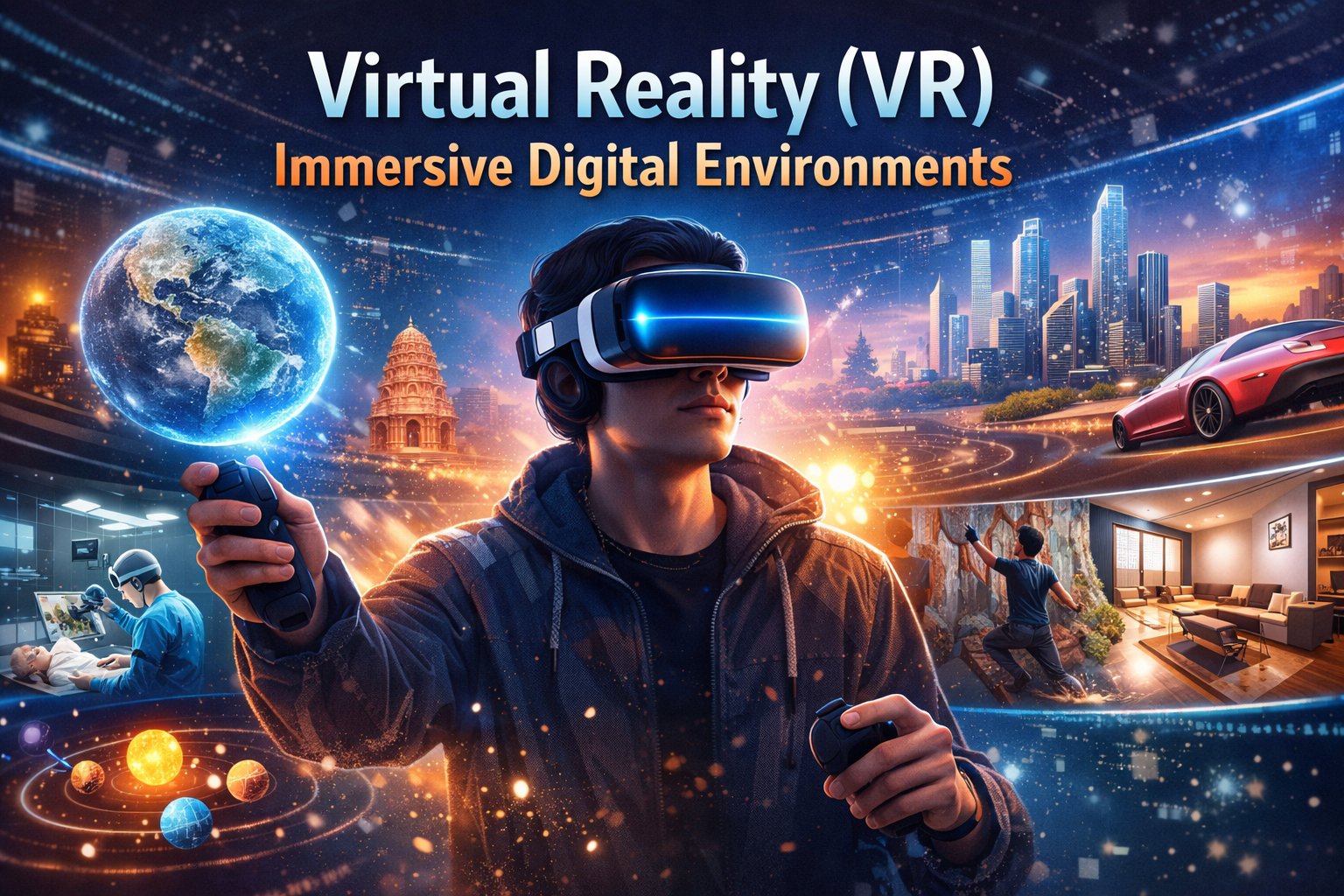
Virtual Reality (VR) – Immersive Digital Environments: A New Digital Reality
Virtual Reality (VR) – Immersive digital environments are transforming the way people interact with technology, entertainment, education, and even healthcare. Virtual reality allows users to step into computer-generated worlds that feel real, interactive, and deeply engaging. From gaming zones in Indian malls to VR classrooms in IITs and medical colleges, virtual reality is quickly becoming part of everyday life.
Unlike traditional screens, virtual reality places users inside a 3D environment using VR headsets, motion sensors, and interactive controllers. Whether it’s exploring ancient Indian temples digitally, attending virtual concerts, or training surgeons, VR is reshaping digital experiences across industries.
What Is Virtual Reality (VR)?
Virtual reality is a technology that creates a simulated, immersive digital environment that users can interact with as if it were real. By wearing VR headsets such as Meta Quest, HTC Vive, or PlayStation VR, users can experience 360-degree visuals, spatial sound, and real-time interaction.
In simple terms, virtual reality replaces the real world with a digital one. This experience feels natural because VR tracks head movements, hand gestures, and sometimes even eye movement, making the environment highly realistic.
How Virtual Reality Works
Virtual reality works by combining hardware and software to create immersive experiences. Here’s how it functions step by step:
1. VR Headsets
VR headsets display two slightly different images to each eye, creating a 3D effect similar to human vision.
2. Motion Tracking
Sensors track head and body movements so the virtual environment responds instantly.
3. Controllers and Haptics
Hand controllers and gloves allow users to interact with virtual objects, adding realism through vibration feedback.
4. VR Software
Specially designed applications generate immersive digital environments such as games, simulations, or training modules.
Types of Virtual Reality Experiences
1. Non-Immersive VR
Basic VR experiences viewed on a screen, commonly used in education and architecture.
2. Semi-Immersive VR
Uses large screens or headsets but limited interaction, often used in flight simulations and training.
3. Fully Immersive VR
Complete immersion using VR headsets, controllers, and motion tracking—popular in gaming and professional training.
Key Benefits of Virtual Reality
Virtual reality offers several advantages that make it powerful and impactful:
Enhanced Learning and Training
VR improves understanding by allowing users to learn by doing. Medical students in India now practice surgeries in virtual environments before operating on real patients.
Safe Simulation
Dangerous scenarios like firefighting, military drills, or industrial training can be practiced safely in VR.
Increased Engagement
Immersive digital environments keep users focused, improving retention and learning outcomes.
Cost Efficiency
Virtual training reduces travel, physical resources, and infrastructure costs over time.
Applications of Virtual Reality Across Industries
Virtual Reality in Education
Virtual reality is revolutionising education by making learning interactive and experiential. Students can explore historical events, conduct virtual science experiments, or walk through the solar system.
In India, many edtech startups and CBSE-aligned platforms are using virtual reality to make classrooms more engaging, especially for STEM education.
Virtual Reality in Healthcare
Healthcare is one of the fastest-growing VR sectors. Applications include:
- Surgical training and planning
- Pain management and therapy
- Mental health treatment for anxiety and PTSD
- Rehabilitation exercises
Indian hospitals and medical colleges are increasingly adopting virtual reality for training doctors and improving patient care.
Virtual Reality in Gaming and Entertainment
Gaming is where virtual reality gained mainstream popularity. VR gaming zones in cities like Mumbai, Bengaluru, and Delhi attract young audiences looking for immersive entertainment.
Beyond gaming, virtual reality is used in:
- Virtual concerts and events
- Film experiences
- Cultural storytelling, including Indian mythology and heritage tours
Virtual Reality in Real Estate and Architecture
Virtual reality allows buyers to take virtual property tours without visiting the site. Real estate developers in India use VR to showcase apartments, commercial spaces, and smart city projects.
Architects use immersive digital environments to visualise designs, detect flaws, and present ideas to clients more effectively.
Virtual Reality in Business and Corporate Training
Companies use virtual reality for:
- Employee onboarding
- Safety training
- Leadership development
- Remote collaboration
Large Indian IT companies and global corporations use VR to train employees efficiently, especially in remote work environments.
Virtual Reality in Tourism and Culture
Virtual reality enables virtual tourism, allowing users to explore destinations like the Taj Mahal, Varanasi ghats, or Kerala backwaters digitally.
This is especially useful for:
- Cultural preservation
- Elderly or disabled travellers
- International tourism promotion
Virtual Reality vs Augmented Reality
Although often confused, virtual reality and augmented reality are different:
| Feature | Virtual Reality | Augmented Reality |
|---|---|---|
| Environment | Fully digital | Real world + digital |
| Device | VR headset | Mobile, AR glasses |
| Immersion | Complete | Partial |
| Example | VR gaming | Snapchat filters |
Virtual reality offers deeper immersion, while AR enhances real-world experiences.
Challenges of Virtual Reality
Despite its benefits, virtual reality faces some challenges:
High Initial Cost
VR hardware can be expensive, limiting accessibility.
Motion Sickness
Some users experience dizziness or discomfort during prolonged use.
Content Development
Creating high-quality VR content requires skilled developers and resources.
Technical Limitations
Battery life, hardware comfort, and space requirements still need improvement.
The Future of Virtual Reality
The future of virtual reality looks promising, especially with advancements in AI, 5G, and cloud computing. Key trends include:
- Lightweight and wireless VR headsets
- Integration with artificial intelligence
- Social VR platforms and virtual offices
- Affordable VR solutions for education and training
India’s growing startup ecosystem and government initiatives like Digital India are accelerating VR adoption across sectors.
Role of Virtual Reality in the Metaverse
Virtual reality plays a major role in building the metaverse—shared digital spaces where people work, play, and socialise. From virtual offices to digital marketplaces, VR enables realistic interaction in these environments.
As more Indian brands explore virtual showrooms and online events, virtual reality will become central to digital engagement strategies.
Why Businesses Should Invest in Virtual Reality
Businesses that adopt virtual reality gain competitive advantages such as:
- Better customer experiences
- Improved training outcomes
- Stronger brand engagement
- Innovative marketing campaigns
From retail brands launching virtual stores to education platforms offering VR-based courses, immersive digital environments are redefining customer interaction.
Virtual Reality and Everyday Life
Virtual reality is no longer limited to tech enthusiasts. It is entering homes, schools, offices, and hospitals. As hardware becomes more affordable and content more diverse, virtual reality will become as common as smartphones.
From virtual yoga sessions inspired by Indian wellness traditions to immersive festival experiences, VR blends technology with culture seamlessly.
Conclusion: The Growing Power of Virtual Reality
Virtual Reality (VR) – Immersive digital environments are shaping the future of how we learn, work, entertain, and connect. With its ability to create realistic, interactive experiences, virtual reality is no longer a luxury—it is a powerful tool driving digital transformation.